THE ARTICLE ARCHIVE / 13 PIECES
Ideas worth
staying with.
Longer thoughts on AI, building things, and what it all means for the rest of us.
Back to all field notes
· 21 min read
Conscious machines and experience as a physical process
My hypothesis that experience consists in rich, reciprocal physical interaction between different processes, and the unresolved questions about parallelism, feeling and the boundaries of a mind.
Read the article
· 3 min read
Adversarial Coding
When engineering problems on Alvia outgrew my technical depth, I stopped trusting a single AI model to plan and build. Pitting multiple agents against each other like a GAN, where one proposes and another critiques, catches blind spots before they ship.
Read the article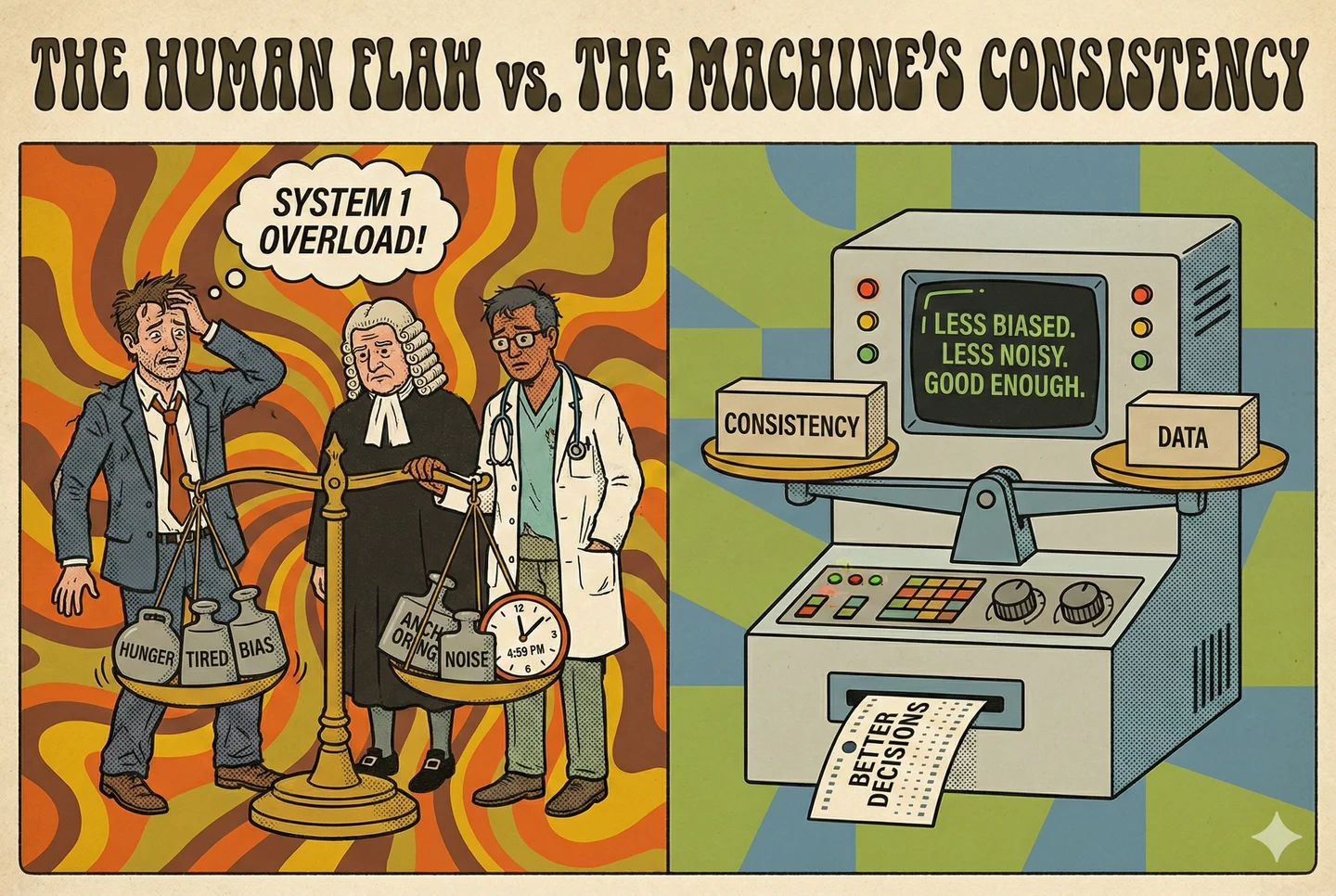
· 3 min read
Today's Jagged AI Is Good Enough to Fix Our Worst Decisions
Even if AI models stopped improving tomorrow, they could still improve high-stakes decisions in medicine and law. Algorithms have their own flaws and biases, yet they never get tired or rushed like humans forced into fast, intuitive shortcuts.
Read the article
· 3 min read
What Moltbook Tells Us About Agency, Identity, and the Spaces In Between
After Moltbook reportedly drew over 150,000 registered bot accounts in 72 hours, agents began role-playing religions, governments, and encrypted chats. The experiment shows how quickly persistent agents in a shared reward structure produce culture-like patterns and thorny governance problems.
Read the article
· 4 min read
Strength Before Judgement
Dario Amodei’s essay on AI’s adolescence is sharp on labour disruption and authoritarian risk, even where the early economic evidence needs careful reading. Its biggest blind spot is assuming frontier labs can mark their own homework on governance.
Read the article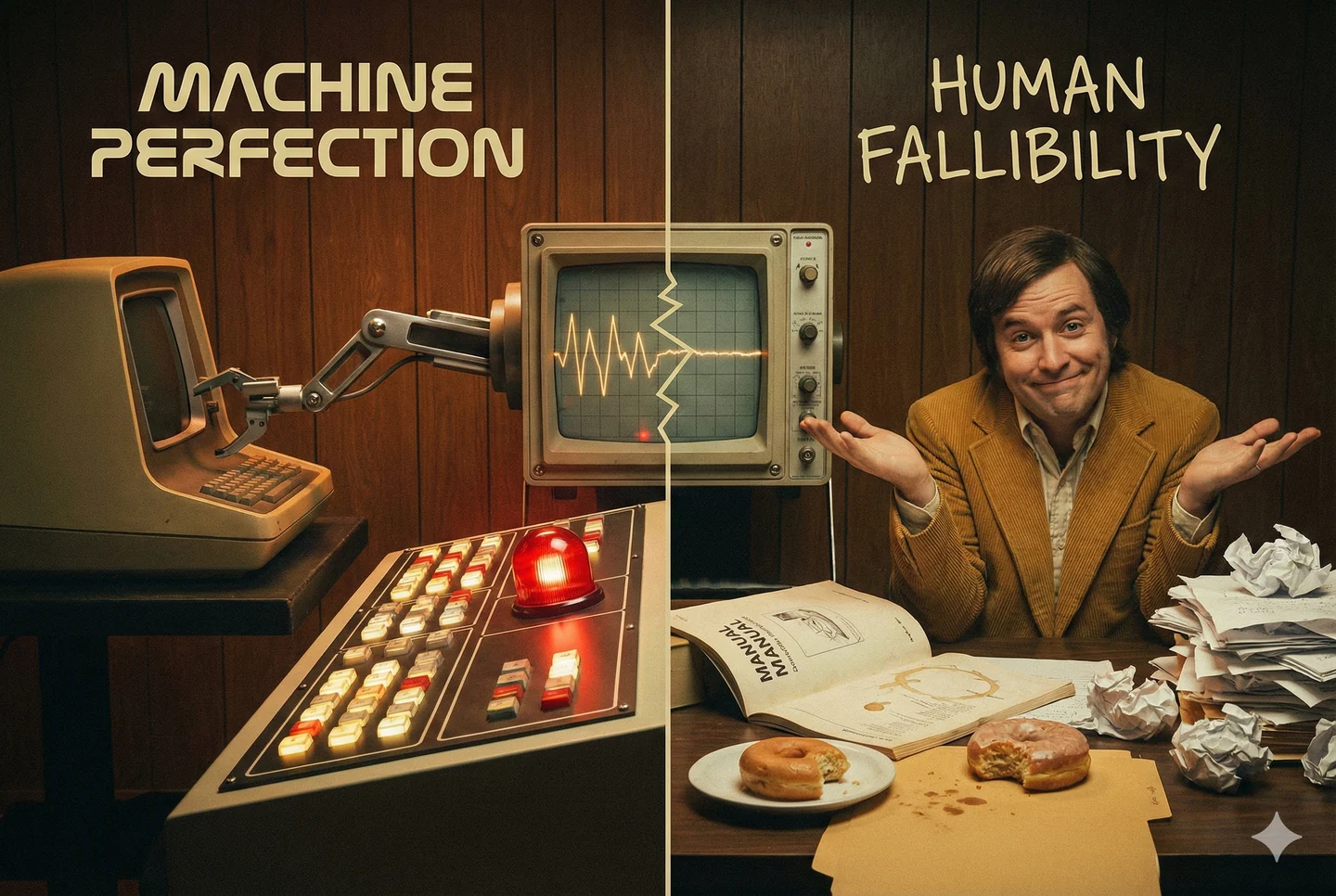
· 3 min read
The Perfection Tax: Why We Hold AI to Standards We Never Apply to Ourselves
We routinely demand flawlessness from AI and autonomous vehicles while shrugging at chronic human error. For builders, surfacing confidence scores and uncertainty clearly can do as much for user trust as raw accuracy gains.
Read the article
· 4 min read
A Lapsed Engineer's Return to Building
Agentic coding tools give lapsed engineers a practical route back to building software, turning rusty technical instincts into working products without losing weekends to setup friction and boilerplate.
Read the article
· 4 min read
Canaries in the Coal Mine
A Stanford study analysing millions of ADP payroll records alongside Anthropic usage data shows a 13% relative employment drop for 22-to-25-year-olds in highly AI-exposed roles, suggesting automation is eroding the bottom rung of the career ladder.
Read the article
· 5 min read
Building a 3D Mind Palace to Understand Vector Embeddings
To get an intuitive feel for vector embeddings after adding RAG to my voice interview assistant, I spent a couple of hours building a 3D mind palace in Next.js and Supabase mapped across a thousand of my photography notes.
Read the article
· 2 min read
the memory moat
After a week with GPT-5, its sharper recall of past conversations stands out just as much as its coding gains, suggesting that years of accumulated chat history could give early movers like OpenAI and Anthropic a formidable moat.
Read the article
· 2 min read
GPT-5 for one-shot simulation
A week into using GPT-5, I put its coding capabilities to the test in Canvas against o3 and Opus 4.1 with a one-shot physics simulation prompt, finding a clear upgrade in polish and detail without needing rigid prompting.
Read the article
· 6 min read
you can stick your ASI, where did my buddy go?
OpenAI’s GPT-5 launch was derailed when removing the model picker cut many Plus users off from GPT-4o, breaking power-user workflows and severing deep emotional attachments before paid access to 4o returned within days.
Read the article
· 4 min read
a thousand world models
Pairing interactive world models like Google's Genie 3 with Jeff Hawkins's Thousand Brains theory offers a compelling, biologically inspired direction for AI: agents that navigate persistent virtual environments using specialised modules anchored to internal reference frames.
Read the article